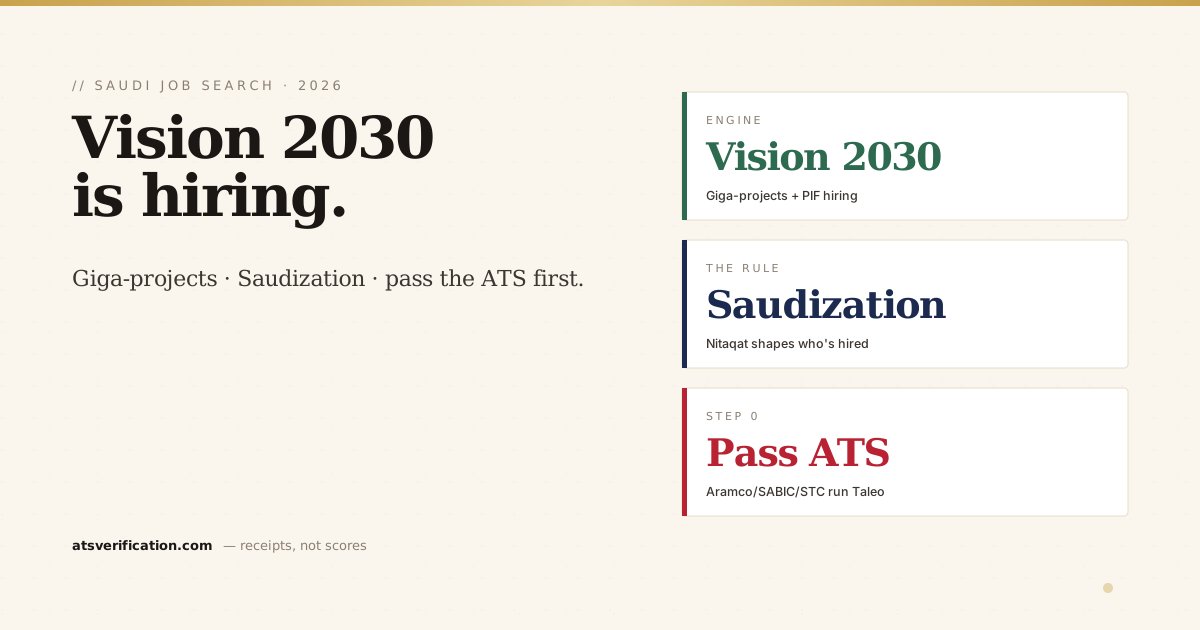
Saudi Arabia is the fastest-transforming job market in the Gulf. Vision 2030 and its giga-projects, NEOM, the Red Sea, Qiddiya, the PIF portfolio, are creating roles at a pace nowhere else in the region can match. But Saudi also has the most distinct rules: Saudization quotas shape who gets hired, government platforms run alongside private job boards, and the big employers filter every CV through an ATS first. Here's the practical 2026 playbook for both Saudi nationals and expats.
- Vision 2030 is the hiring engine. Giga-projects and the PIF ecosystem (NEOM, SABIC, Aramco, STC, the Red Sea) are hiring hard, target the sectors actually expanding.
- Saudization (Nitaqat) shapes everything. Many roles are reserved for Saudi nationals; expats compete strongest in specialized technical, leadership, and niche roles where local talent is scarce.
- Use both private boards and government platforms, LinkedIn, Bayt, GulfTalent for the private market; the national employment platforms (via HRSD) and Qiwa for the formal system.
- Credentials must be explicit and verifiable, Saudi enterprise filters are strict on certifications, and attestation often matters.
- Step 0 everyone skips: Aramco, SABIC, STC, the banks and PIF companies all run ATS software (Taleo, SuccessFactors, Oracle). If your CV doesn't parse, none of the above matters.
The Saudi job market in 2026
Two forces define the search:
- The Vision 2030 boom. Saudi Arabia is spending at unprecedented scale to diversify beyond oil, tourism, entertainment, tech, logistics, renewables, and construction around the giga-projects. The result is real, broad demand across professional and technical roles, especially anything tied to the PIF portfolio (NEOM, Qiddiya, the Red Sea, ROSHN, Lucid, and dozens more).
- Saudization (Nitaqat). The Kingdom prioritizes employment of Saudi nationals through the Nitaqat quota system, administered by the Ministry of Human Resources and Social Development (HRSD). For Saudi nationals, this is a powerful tailwind, employers are actively incentivized to hire you. For expats, it means many roles are reserved for citizens; you compete most effectively for positions requiring specialized skills, senior experience, or niche expertise that's genuinely scarce locally.
Formal employment runs through government platforms: the national employment system and Qiwa (the labour-market platform for contracts and work permits). Understand those for the rules; use the strategy below to land the role.
Top job sites in Saudi Arabia (2026)
| Channel | Best for |
|---|---|
| Where Saudi recruiters and giga-project talent teams actively source. Your #1 channel for professional roles. | |
| Bayt | The largest Gulf-native board; deep across all sectors and seniority in KSA. |
| GulfTalent | Professional and management roles, used by major employers and agencies. |
| Naukrigulf · Indeed Saudi Arabia | High volume across SMEs, tech, and engineering; large searchable CV databases. |
| Government platforms (via HRSD) | National employment platforms (Jadarat / Taqat), essential for Saudi nationals; the formal system for many roles. |
| Company career portals | Aramco, SABIC, STC, NEOM, PIF companies, the banks, apply directly; they run their own ATS. |
Set alerts on two or three boards, and put real effort into the giga-project and PIF-company career portals directly, that's where the Vision 2030 hiring volume actually sits.
Saudization: how expats should read it
This is the part candidates misjudge. Saudization isn't a wall, it's a filter that changes which roles are realistic:
- Saudi nationals: you are in high demand. Foreground your nationality, use the national employment platforms, and target Nitaqat-driven roles where employers need to hit quotas.
- Expats: compete where local supply is thin, specialized engineering, senior leadership, niche technical and project roles on the giga-projects, and skills the market is still importing. Generic mid-level roles that many Saudis can fill are the hardest to land. Be specific about the rare, in-demand skill you bring.
Networking and LinkedIn
As across the Gulf, LinkedIn is central, recruiters and giga-project talent teams source on it daily. Optimize your profile to be found (keyword + location headline, KSA location, "Open to Work"), connect with sector recruiters and the agencies active in Saudi, and reach out with short, specific messages. The full mechanics and copy-paste outreach templates are in our LinkedIn networking guide, the same approach applies in Saudi. (Building a Gulf-wide search? The UAE job-search guide is the companion to this one.)
Application details that matter in KSA
- Iqama / visa status: state it plainly, "Transferable Iqama," "requires sponsorship," or for nationals, "Saudi national." Recruiters filter on this first.
- Certifications, explicitly and in full: Saudi enterprise filters are strict on credentials, spell out qualifications in both forms ("Project Management Professional (PMP)") and note attestation where relevant. Our Saudi resume format guide covers this in depth.
- Arabic: state it if you have it, genuinely valuable for many roles, and required for some.
- Location & availability: "Based in Riyadh / willing to relocate · available [timeframe]."
Step 0 everyone skips: pass the software first
Here's the trap that wastes Saudi job searches: pouring effort into applications while the CV silently fails the software filter. Saudi Arabia's major employers, Aramco, SABIC, STC, the banks, and the PIF/giga-project companies, run Applicant Tracking Systems (Oracle Taleo, SAP SuccessFactors). Your CV is parsed into fields and keyword-scored before a recruiter opens it (the mechanics are in how ATS scoring works). A two-column "designer" CV, a photo in the header, or a credentials table can scramble in the parser, so a qualified candidate never surfaces. (Region-specific rules: our KSA ATS resume guide and the Saudi Arabia hub.)
So before you spend weeks applying: confirm your CV actually parses. Run a free scan, it shows exactly what the ATS extracts (your name, title, dates, certifications, Iqama line) so your applications land as readable profiles, not blank fields.
→ Free ATS scan, make sure your CV passes the software Saudi employers use before you apply