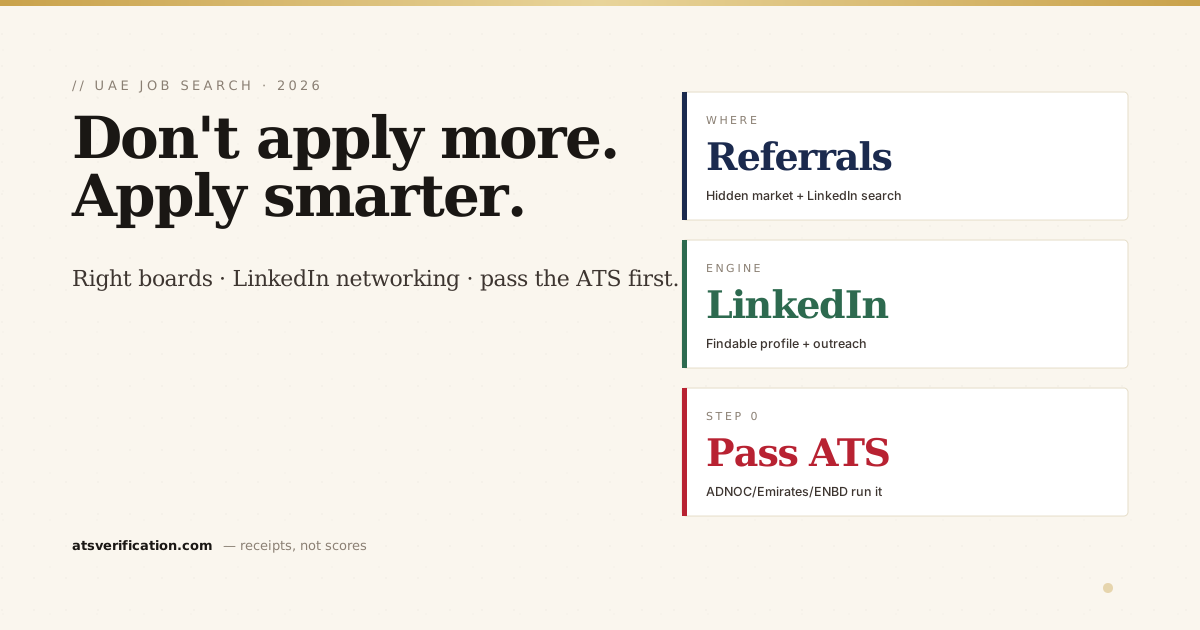
The UAE is one of the most opportunity-dense job markets in the world, and one of the most competitive, because everyone else knows it too. A single Dubai role can draw hundreds of applicants from across the globe. Winning here isn't about applying to more jobs; it's about applying smarter: the right channels, real networking, and getting past the software filter before a human ever sees you. This is the practical 2026 playbook.
- Most UAE roles are filled through referrals and recruiter searches, not cold applications, so networking is the highest-leverage activity, not job-board spray.
- Use the right boards: Bayt and GulfTalent (Gulf-native), LinkedIn (where recruiters source), Naukrigulf, Indeed UAE, Dubizzle Jobs, plus company career portals directly.
- LinkedIn is your engine in the UAE, an optimized profile + deliberate recruiter outreach beats hundreds of portal applications.
- State visa status, location and availability up front, UAE recruiters filter on these before reading your experience.
- Step 0 everyone skips: the big UAE employers run ATS software (Workday, SuccessFactors, Taleo). If your resume doesn't parse, none of the above matters.
The UAE job market reality
Two facts shape every UAE job search:
- The hidden job market is huge. A large share of roles, especially mid-to-senior, are filled through referrals, recruiter networks, and internal moves before they're ever publicly posted. The candidates who only apply to listed jobs are competing for the leftovers.
- It's a recruiter-driven, global talent pool. Employers and agencies search LinkedIn and CV databases proactively. That means your job is to be findable and referable, not just to apply.
Official employment in the UAE runs through the Ministry of Human Resources & Emiratisation, the MOHRE portal governs labour contracts and work permits, and the UAE Government services portal is the authoritative reference for visa and employment procedures. Read those for the rules; use the strategy below to actually land the role.
Top job sites in the UAE (2026)
| Site | Best for |
|---|---|
| Where UAE recruiters actively source. Your #1 channel, apply AND be found. | |
| Bayt | The largest Gulf-native job site; strong across all sectors and seniority levels. |
| GulfTalent | Professional/management roles, often used by top agencies and large employers. |
| Naukrigulf | Strong for South-Asian talent and tech/engineering; large CV database recruiters search. |
| Indeed UAE | Broad aggregator; good volume across SMEs and entry-to-mid roles. |
| Dubizzle Jobs | SME, hospitality, retail, and local roles, high volume, faster-moving. |
| Company career portals | Emirates, ADNOC, ENBD, DP World, Majid Al Futtaim, Chalhoub, apply directly; these run their own ATS. |
Strategy, not spray: set up alerts on two or three boards, apply selectively to roles you genuinely fit, and spend the rest of your time on the company portals and LinkedIn. Mass-applying to 200 listings performs worse than 20 targeted applications backed by a referral.
LinkedIn networking for UAE job seekers
In the Gulf, LinkedIn isn't a formality, it's where hiring actually starts. Here's the essentials (the full playbook, with copy-paste outreach messages, is in LinkedIn networking for UAE job seekers):
1. Make your profile recruiter-findable
- Headline with keywords + location: "Financial Analyst | FP&A | Dubai, UAE" beats "Aspiring finance professional." Recruiters search by title + city.
- "Open to Work": turn it on. Use the recruiters-only visibility if you're currently employed; use the public green banner if you're not and want maximum reach.
- About + Experience full of the right terms, LinkedIn search is keyword-matched, just like an ATS. Mirror the vocabulary of the roles you want.
- Set location to the UAE (or "Open to relocating to UAE"), recruiters filter hard on location.
2. Network with intent (not mass-connecting)
- Connect with recruiters and hiring managers in your target companies and sectors. In the UAE, agency recruiters (Michael Page, Robert Half, Hays, Cooper Fitch, Charterhouse) place a large share of professional roles, follow and connect with them. (How agencies work, and the one fee red flag to refuse, is in working with recruitment agencies in the UAE.)
- Send a short, specific note with the request: who you are, the kind of role, why them. Two lines. No CV attached on first contact.
- Engage before you ask, comment thoughtfully on target companies' and recruiters' posts for a week or two. You become a familiar name before you ever DM.
- Ask for referrals, warmly. A referral into a UAE company often jumps you past the entire portal queue. People help people they recognize.
3. Be active, not just present
Post occasionally about your field, share a useful insight, comment in your industry. Activity keeps you in recruiters' feeds and signals you're engaged and current, which matters more in the relationship-driven Gulf market than in many Western ones.
Application details UAE recruiters filter on
UAE recruiters scan for logistics before qualifications. Make these unmissable near the top of your CV and in your applications:
- Visa status: "UAE residence visa (transferable)," "on husband/father sponsorship," "visit visa," or "requires sponsorship." Recruiters filter on this first.
- Location & availability: "Based in Dubai · available immediately / 30-day notice."
- Nationality/languages where relevant, some roles genuinely require Arabic or specific market experience; state it if you have it.
The CV format itself follows UAE conventions that differ from the US/UK, covered in our Dubai/UAE resume format guide and ATS resume guide for UAE applicants. Role-specific versions exist too (e.g. finance, engineering), and the UAE hub page ties them together.
Step 0 everyone skips: get past the software first
Here's the trap that wastes more UAE job searches than any other: candidates pour effort into networking and applications while their CV silently fails the software filter. The major UAE employers, ADNOC, Emirates Group, ENBD, FAB, Mubadala, DP World, the big consultancies and retailers, run Applicant Tracking Systems (Workday, SAP SuccessFactors, Oracle Taleo). Your CV is parsed into fields and keyword-scored before a recruiter ever opens it (the mechanics are in how ATS scoring works). A two-column "designer" CV, a photo in the header, or a skills table can scramble in the parser, so a perfectly qualified candidate never surfaces.
So before you spend a month networking and applying: confirm your CV actually parses. Run a free scan, it shows you exactly what the ATS extracts (your name, title, dates, skills, and visa/availability line) so you know your applications are landing as readable profiles, not blank fields.
Two companion reads: applying from outside the UAE has its own playbook, how to apply for Dubai jobs from abroad, and if your applications keep going silent, the seven filters behind it are in why UAE applications get no response.
→ Free ATS scan, make sure your CV passes the software UAE employers use before you start applying