You've applied to 50, 100, maybe 300 jobs in Dubai and Abu Dhabi. Strong experience, real qualifications, and total silence. Not even rejections. Before you conclude the UAE market is closed or your career is the problem, understand this: UAE application silence is almost always mechanical, not personal. There are seven silent filters between your CV and a human, and most candidates are failing two or three of them at once. Every one is fixable.
- Silence is the default, not a verdict. Popular Dubai roles attract hundreds of applicants; most employers respond only to shortlisted candidates.
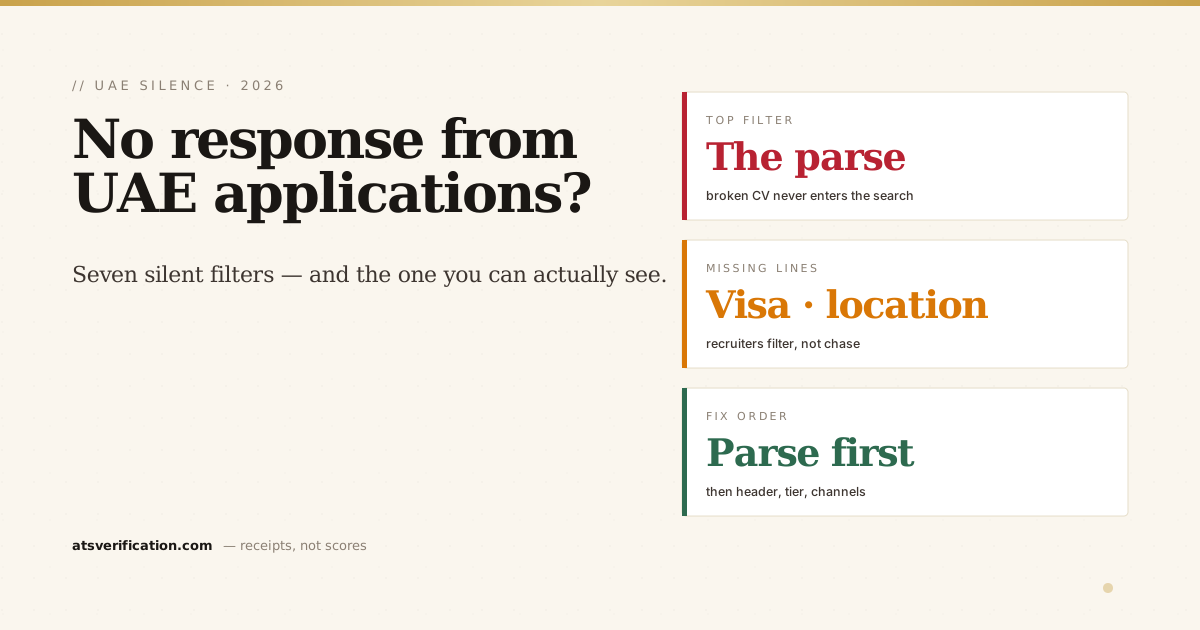
- The biggest silent filter is the parse. Large UAE employers run CVs through hiring software first, a broken layout means you never enter the recruiter's search results at all.
- The second is a missing visa/availability line. Recruiters filter hard on "where are they and when can they start", if your CV doesn't say it, many won't chase you to ask.
- Some silence isn't about you: roles reserved for Emiratisation, agency database ads, and postings filled internally were never winnable, stop counting them as failures.
- Fix order matters: parse first, header lines second, employer-tier format third, channels last. Volume without those fixes just makes more silence.
First, the volume reality
Dubai is one of the most applied-to job markets on earth: a visible role at a known employer routinely draws several hundred applications within days, from candidates in the UAE and across Asia, Africa and Europe. At that volume, no recruiter reads every CV, they rely on screening questions, database keyword searches and shortlists, and they reply to the shortlist only. So the silence itself tells you nothing. What matters is which filter is eating your applications. Here are the seven, in order of how often we see them.
Filter 1: your CV fails the parse (the big one)
ADNOC, Emirates Group, ENBD, Emaar, Etihad, the big hospitals, the DIFC firms, all of them run applicant tracking systems. Your CV is parsed into a database of fields (name, titles, dates, skills) before any human sees it, and recruiters then search that database. If your layout breaks parsing, a two-column template, a skills table, contact details in the page header, your qualifications never enter the search index. In our controlled parsing benchmark, a two-column layout was the only variant to draw a critical reading-order flag; the full two-column breakdown is here. The recruiter never rejected you. They never saw you.
Fix: single column, standard headings, contact in the body of page one, then verify by looking at the actual parsed output before your next application.
Filter 2: the missing visa/availability line
UAE recruiters screen on three practical questions: where are you, what's your visa situation, when can you start. If your CV doesn't answer them in the header, "Dubai, UAE · own visa · immediate joiner" or "Mumbai, India · available to relocate within 30 days · employer sponsorship", many recruiters simply move to the next of 400 candidates who did. If you're applying from outside the UAE, this filter hits hardest; the complete overseas playbook is in how to apply for Dubai jobs from abroad.
Filter 3: wrong CV for the employer tier
The UAE isn't one market, it's at least three. The government/energy tier (SuccessFactors), the banking/property tier (Taleo) and the DIFC/multinational tier (Workday) each expect different conventions, from photo/DOB norms to keyword patterns. A CV tuned for one tier reads wrong at another. The tier-by-tier rules are in the Dubai/UAE resume format guide.
Filter 4: screening questions knocked you out
Portal questions, visa status, notice period, salary expectation, years of experience, are hard filters applied before CV review. One over-optimistic salary number or a vague notice period can end the application silently. Answer them precisely and consistently with your CV.
Filter 5: the role was reserved or already filled
Two honest UAE realities: some roles, particularly in government-linked entities and banking, are prioritized or reserved for UAE Nationals under Emiratisation policy (administered through MOHRE and the Nafis programme), and some postings are published while an internal or referred candidate is already chosen. Neither will ever respond to you, and neither says anything about your employability. Stop counting them.
Filter 6: agency database ads
A meaningful share of UAE job-board postings are agency adverts collecting CVs for their database rather than one live vacancy. Applying still has value, that database is where agency recruiters search later, but it explains a lot of "no response." How to make agencies actually work for you is covered in working with UAE recruitment agencies.
Filter 7: you're invisible outside the application
UAE hiring leans heavily on recruiter searches and referrals, GulfTalent's market research has long shown referrals and direct search dominate how roles actually fill. If your only presence is an application in a 400-CV pile, you're playing one channel in a three-channel market. A findable, keyword-complete LinkedIn profile plus deliberate outreach (templates in the UAE LinkedIn networking guide) makes recruiters come to you.
What to change this week
- See your parse. Look at the actual text hiring software extracts from your CV. If your name, titles, dates or skills come out wrong, fix that before anything else, it multiplies every application you send after.
- Add the header lines: location · visa status · availability/notice, on page one, in the body.
- Pick your tier and align the CV to it.
- Answer screening questions carefully, consistent numbers, honest notice period.
- Open the second channel: LinkedIn findability + 5 recruiter outreach messages a week beats 50 more silent portal applications.
Start where the silence starts
Six of the seven filters you can only influence. The first one you can see: run a free scan and look at exactly what UAE hiring software extracts from your CV, field by field, with every structural failure flagged. If the parse is broken, that's your silence, and it's a 30-minute fix, not a career verdict.
→ Free ATS scan, find out if the software is why nobody replies