Every day, thousands of people in India, Pakistan, the Philippines, Egypt and beyond apply to Dubai jobs from their home country, and most never hear anything back. Not because getting hired from abroad is impossible (it happens constantly; the UAE workforce is overwhelmingly expat), but because applying from abroad has its own rules, and most CVs break all of them. Here's the honest playbook.
- Yes, UAE employers hire from abroad, most of the workforce arrived that way. But you're competing against candidates already in Dubai, so your CV has to remove every doubt a recruiter has about an overseas hire.
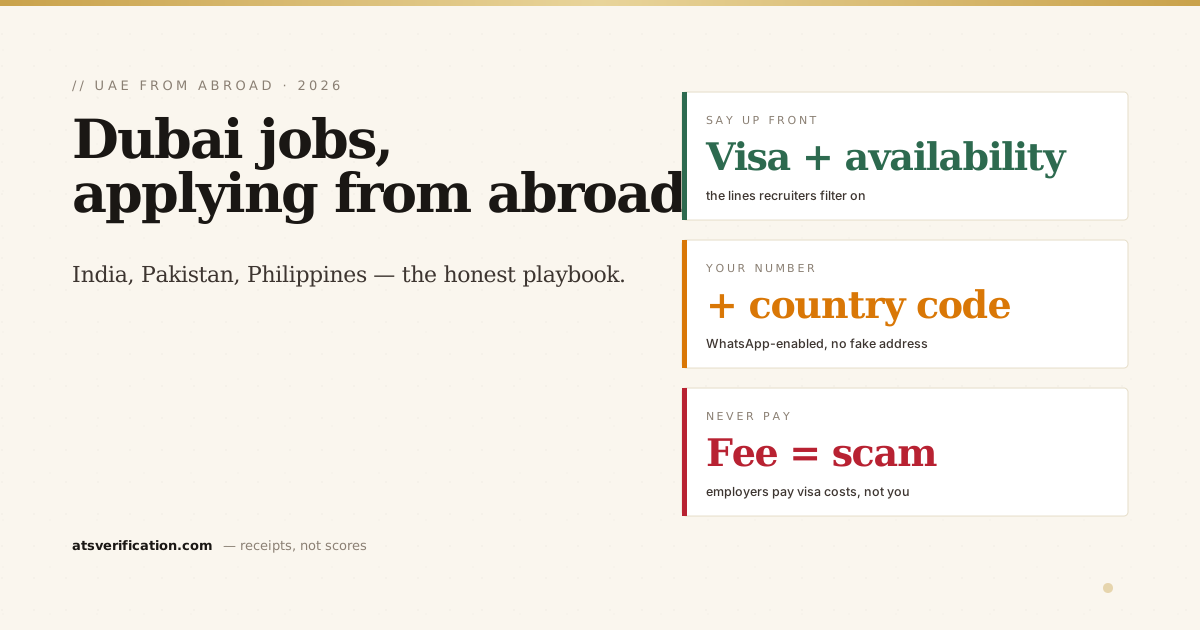
- Say the three things recruiters filter on, up front: where you are, when you can start, and that you understand the employer sponsors the visa. Hiding your location wastes everyone's time, including yours.
- Never fake a Dubai address. It surfaces at screening, and it reads as dishonesty, the one thing no employer forgives.
- Your phone number matters more than you think: full country code, WhatsApp-enabled, noted on the CV. UAE recruiters live on WhatsApp.
- The ATS step still comes first. Large UAE employers parse your CV through hiring software before any human reads it, a broken layout fails you from 2,000 km away exactly like it does locally.
- Never pay anyone for a job or a visa. Legitimate UAE employers pay their own recruitment costs. "Pay for your visa/processing" = scam, every time.
The honest starting point: can you really get hired from abroad?
Yes, with a caveat. Around 90% of the UAE's workforce is expatriate, and nearly all of them were hired the way you're trying to be. Employers routinely sponsor employment visas for the right candidate; that's the normal mechanic of the UAE labour market, administered under MOHRE (the Ministry of Human Resources and Emiratisation).
The caveat: for junior, high-supply roles (admin, retail, hospitality entry level), employers can fill positions from candidates already in the UAE on visit visas, so overseas applications for those roles face brutal odds. Where hiring from abroad genuinely works is skilled and specialist roles: finance, engineering, healthcare, IT, senior sales, project management. If that's you, the game is winnable, if your application answers the recruiter's overseas-hire doubts before they're asked.
The 6 lines your CV needs (this is where most fail)
A UAE recruiter scanning an overseas application is silently asking: where are they, when can they start, do they expect me to pay for anything weird, and can I even reach them? Answer all of it in your header:
- Real location, stated plainly: "Lahore, Pakistan" or "Mumbai, India", city and country. Never a borrowed Dubai address; it unravels at the first screening call.
- Availability line: "Available to relocate to the UAE, can join within 30 days." This single line converts "overseas risk" into "planned hire."
- Notice period, honestly: "Currently serving 60-day notice" beats a surprise later.
- Phone with full country code, WhatsApp noted: "+92 300 XXX XXXX (WhatsApp)". UAE recruiters shortlist on WhatsApp voice notes more than email.
- Visa expectation, one line: "Employment visa, employer sponsorship (standard UAE process)." It signals you know how the system works and expect nothing unusual.
- Passport-ready signal (if true): "Valid passport; previous GCC experience" if you have it, Gulf experience is a strong filter keyword.
Put these in the body of page one, not in a page header, some ATS engines skip header regions entirely, and then your one advantage never gets parsed.
Which channels actually work from abroad
- Company career portals (best odds): ADNOC, Emirates Group, ENBD, Emaar, Etihad, the big hospitals and consultancies all take direct applications from abroad through their portals, which run ATS software. Direct beats aggregators.
- LinkedIn (second best): UAE recruiters search LinkedIn daily. Set your location honestly but add "Relocating to UAE" in the headline, and use the outreach method in our UAE LinkedIn networking guide.
- UAE job boards: Bayt and GulfTalent both support overseas applicants and are where regional recruiters search their databases.
- Recruitment agencies (selective): useful for specialist and senior roles; nearly useless for junior overseas candidates. How to work with them, and the fee red flag, is covered in working with UAE recruitment agencies.
The full channel-by-channel strategy lives in our pillar guide, how to find a job in the UAE.
Format your CV for the UAE, not your home market
Indian, Pakistani and Filipino CV conventions differ from what UAE employers expect, and the UAE itself splits by employer tier, the ADNOC/SuccessFactors tier, the banking/Taleo tier, and the DIFC/Workday tier each read CVs differently. The complete breakdown is in the Dubai/UAE resume format guide. The universal rules: single column, standard section headings, quantified achievements, and 2 pages maximum.
The step almost everyone skips: the parse
Here's the part that makes overseas rejection silent. When you apply to a large UAE employer's portal, your CV is parsed by hiring software into a database before any recruiter sees it. If your layout breaks parsing, a two-column template, contact details the parser drops, headings it doesn't recognize, you don't get a rejection. You get nothing. From abroad, "nothing" is indistinguishable from "no overseas hiring," so people give up on a winnable market. Why UAE applications go silent breaks down every cause, and the fix starts with seeing what the software extracts from your file.
The scam warning (please read this one)
The overseas-applicant market is where UAE job scams live. The rules that protect you:
- Never pay for a job offer, visa processing, or "file opening." Legitimate UAE employers bear recruitment and visa costs. This is the single brightest red line.
- No real employer makes an offer without an interview. An "offer letter" from a WhatsApp number you never spoke to is bait.
- Verify the company exists, official domain email (not Gmail), real office, listed on the UAE's official portal ecosystem (u.ae links the legitimate government channels).
Realistic expectations
From abroad, a well-run search for a skilled role typically takes 3–6 months, and interviews happen on video first with a final round sometimes done in person on a visit visa. That's normal. What shortens it is never volume, it's a CV that parses cleanly, answers the overseas-hire doubts in the header, and matches the employer tier's conventions.
Check the one thing you can control today
You can't control the market from Lahore or Manila, but you can control whether the software on the other end can actually read you. Run a free scan and see exactly what a UAE employer's parser extracts from your CV, name, titles, dates, skills, and whether your availability line survives, before you send another application into silence.
→ Free ATS scan, make sure UAE hiring software can read your CV from anywhere