I have worked in finance for over fifteen years and the job is not the same one I started with. It is changing fast and a lot of people have not caught up yet. The old finance job was about recording the past. The new one is about shaping the future. Here is what I see, and what it means for your career and your resume.
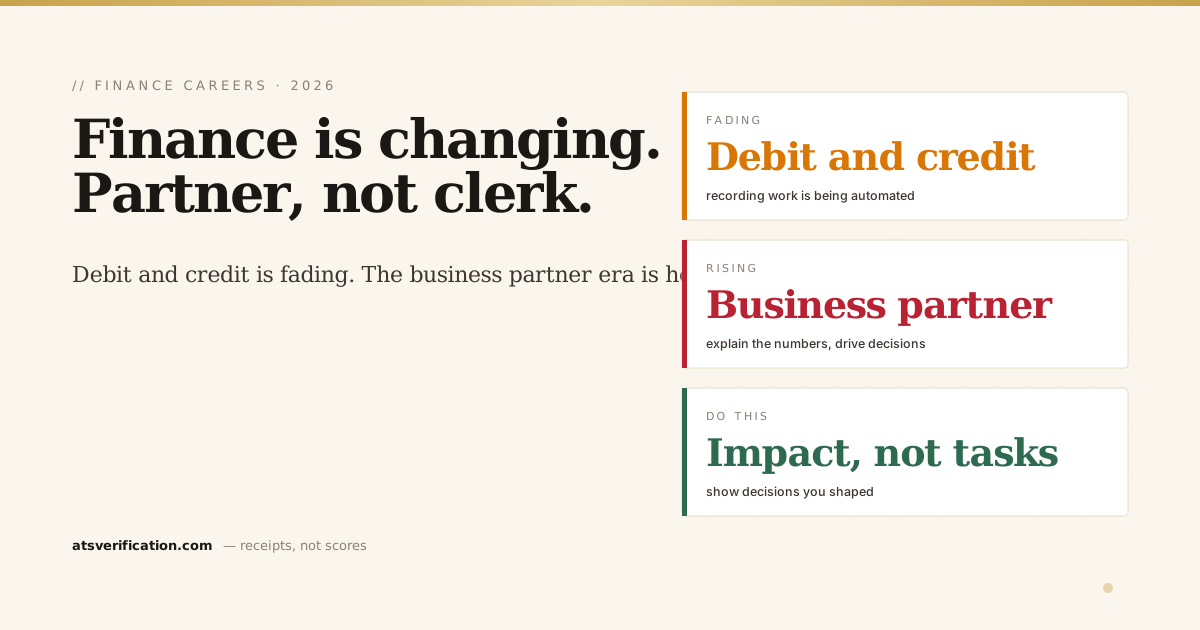
- The recording job is fading. Debit and credit, closing the books and reporting the past are getting automated.
- The new finance job has a name. Business partner. The business needs people who explain what the numbers mean and what to do next.
- Value now comes from influence, not accuracy alone. Nobody remembers a clean journal entry. They remember the decision you helped them get right.
- Learn the business, build data skills, and speak up. A finance person who only reports is a cost. One who influences is an asset.
- Your resume has to change too. A list of tasks tells the wrong story. Show the problems you solved and the decisions you shaped.
The old finance job is fading
When I started my career finance was mostly about recording. You booked the debit and the credit. You closed the month. You produced a report that told everyone what already happened. That was the job. If you were accurate and on time you were good at it.
That version of the job is dying. I do not say this to scare anyone. I say it because it is true and it is better to hear it early. Software does the recording now. Systems post entries on their own. A month end that used to take two weeks now takes a few days. AI is starting to handle the parts that felt safe only a year ago. The World Economic Forum Future of Jobs research even lists bookkeeping and payroll clerks among the fastest declining roles. The machine is faster than us at the mechanical work and it never gets tired.
So what is the human for
Here is the honest question. If software can record the numbers then what is the human for? The answer is simple. The business does not need another person to write down what happened. It needs someone to explain what it means and what to do next.
This is the same shift that is changing how companies hire. The routine work is being handled by machines, from the finance close to the first pass on your resume. I wrote about that screening change in how AI resume screening works in 2026. The lesson is the same in both places. The value has moved to judgment.
The new job has a name. Business partner.
A business partner does not hide in a corner with a spreadsheet. They sit with the sales team and ask why a deal lost money. They sit with operations and find the cost that is quietly eating the margin. They sit with the CEO and help decide where to bet next. They turn numbers into decisions. Professional bodies like ACCA have been saying for years that this partnering skill set is now the core of the modern finance role.
What I have seen in my own work
I have lived this shift myself. In my current role the real value is not the close. The close is expected. The value is when I walk into a CFO and CEO review and show why a region is slipping and what we should do about it. The value is when I help set a price or flag a risk before it turns into a loss. That is the work that moves the company. Nobody remembers a clean journal entry. They remember the decision you helped them get right.
How to stay valuable in finance
If you are in finance and you want to stay valuable here is what I would focus on.
- Learn the business and not just the ledger. Know how your company actually makes money. Know the customers. Know where the pain is.
- Lead with impact and not tasks. Everyone can close books. Lead with the problems you solved and the decisions you changed.
- Build data skills. You do not need to be a coder. You do need to be the person who can pull an insight out of a mess of numbers and explain it in plain words.
- Partner across teams. Sit with sales and operations. Understand their world so your numbers actually help them.
- Speak up. The difference between a cost and an asset is often just the courage to say what the numbers are really telling you.
I know this can feel unfair. Many of us were trained to be precise and quiet and to trust the process. Those are good habits. But precision alone is not enough anymore. The people who will win in finance over the next ten years are the ones who use their numbers to drive change.
What this means for your resume
The debit and credit era is closing. The business partner era is here. The good news is that this is a better job. It is more human. It is more interesting. And it is much harder for a machine to replace.
One last thing. If your resume still reads like a list of tasks then it is telling the wrong story. Show the impact. This is exactly why a duties list fails and an impact story wins, which I broke down in STAR vs XYZ resume bullets and how to quantify your achievements. If you are a finance professional, the placement of your credentials and your impact matters even more, and I covered that in the ATS resume guide for finance professionals. When your resume is ready, run it through a free ATS scan to see the exact text a system pulls from it, so your business partner story survives the first filter. If it is still being ignored, start with why your resume is not getting interviews.