A UAE CV usually carries more personal data than a resume anywhere else. Alongside your name and contact details, the local format often includes a photo, date of birth, nationality, marital status, and sometimes visa status or an ID number. That makes the question "is it safe to upload this to an online resume checker?" more important here than almost anywhere else. Here's the honest answer for job seekers in the UAE, what to protect, what a trustworthy tool does, and how to check your CV safely.
- UAE CVs are data-rich. Photo, DOB, nationality, and sometimes passport, visa, or Emirates ID details make your CV more sensitive than a typical Western resume, so where you upload it matters more.
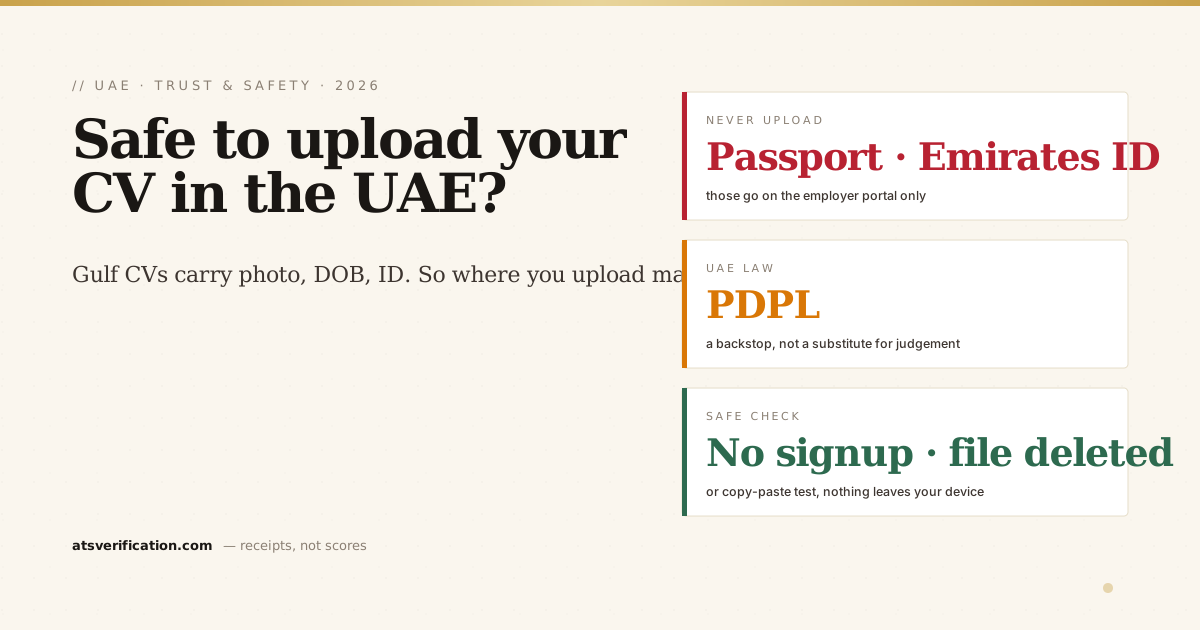
- Never upload a CV that contains a passport number, Emirates ID number, or visa number. Those belong in an application form on the employer's own portal, never in a document you paste into random tools.
- The UAE has a data protection law (PDPL). Responsible services handle personal data lawfully, but you still have to choose responsible services.
- The red flags are universal: a tool that forces a signup to show results, won't say it deletes your file, or invents a fake "ATS score" is not one to trust with a data-heavy CV.
- Big UAE employers run applicant tracking systems, so checking that your CV actually parses is worth doing, just do it with a tool that respects your data.
Why a UAE CV needs extra care
The traditional Gulf CV format asks for details a US or UK resume never would, a passport-style photo, date of birth, nationality, and marital status are common, and some templates still include a visa or Emirates ID reference (our UAE resume format guide covers what actually belongs on the page). The more personal data a document holds, the more it matters where that document ends up. A resume checker that quietly stores your file is holding far more of your identity than the same tool would from a bare Western resume.
The one rule to never break
Never upload a CV that contains your passport number, Emirates ID number, or visa number to any third-party tool. Those identifiers belong only in an official application on the employer's own portal, or with a licensed recruitment agency you've vetted. If your CV template includes them, remove them before you run it through any online checker. A checker needs to see your layout and text to test how it parses, it never needs your government ID numbers to do that.
The UAE's data protection law
The UAE has a Personal Data Protection Law (PDPL) that sets expectations for how personal data is collected and handled. Reputable services operate within that framework, and you can read the government's overview on the official UAE portal on data protection. But the law is a backstop, not a substitute for judgement, you still choose which tools to trust, and the safest data is the data you never hand over in the first place.
The red flags, the same everywhere, higher stakes here
- You must sign up or give your email to see results. Then your email is the product, and your data-rich CV was the bait.
- No clear statement that your file is deleted. With a CV carrying a photo and personal details, an un-deleted file is a real exposure.
- Vague privacy terms. Anything reserving the right to "share with partners" deserves a hard no for a document this personal.
- A fabricated "ATS score." No real applicant tracking system produces a 0–100 number, a tool that fakes one is comfortable misleading you (more in are ATS checkers accurate).
Check safely, including without uploading
You can test whether your CV is readable without handing your file to anyone: the copy-paste test (select all, copy, paste into Notepad) shows you roughly what a parser extracts, with nothing leaving your device. It's a genuinely private first check, and worth doing, because large UAE employers like the ones covered in ATS tips for UAE applicants run resumes through parsing software before a recruiter sees them.
Where we stand
We built ATS Verification to be a tool we'd trust with our own data: no login, no account, your file parsed in memory and never stored, and no invented score, just the actual text an ATS reads. We'd still tell you to strip any ID numbers from your CV before uploading it anywhere, ours included, because that's simply good practice. Whether you use us or another tool, judge it the same way: what does it do with your file, and does it tell you the truth?