If you're applying to jobs in Brazil, one question comes up before formatting even matters: should your currículo be in Portuguese or English? It feels like a small choice, but it affects how well the applicant tracking system reads you, because Gupy, Brazil's dominant ATS, is tuned for Portuguese. Here's a simple way to decide, and how to make either version parse cleanly.
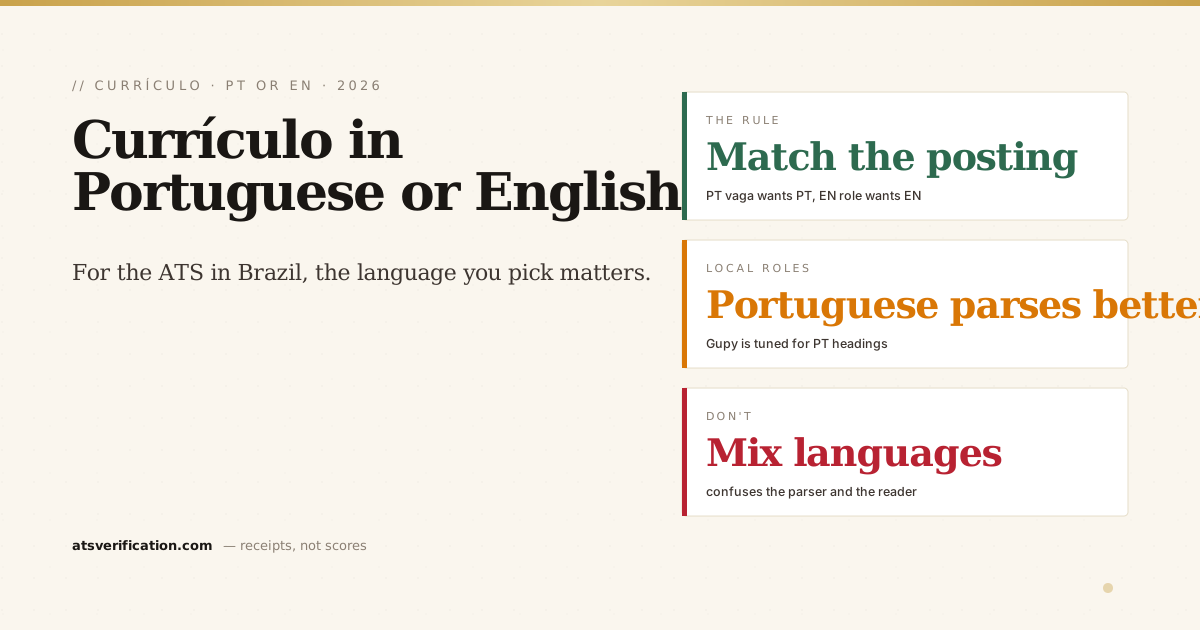
- Match the language of the job posting. A Portuguese vaga wants a Portuguese currículo; an English-language role wants English.
- Brazilian-domestic roles favor Portuguese. Gupy's parser is optimized for Portuguese section headings, so a Portuguese currículo often parses more cleanly on local roles.
- Multinationals and global roles often want English, especially where the working language is English.
- Don't mix languages in one document. A half-Portuguese, half-English currículo confuses both the parser and the reader.
- Whichever you choose, the format rules are the same: single column, standard headings, real text.
The simple rule: match the posting
The safest default is to write your currículo in the language of the job posting. If the vaga is written in Portuguese, apply in Portuguese. If the role is advertised in English, common at multinationals, global tech companies, and English-first startups, apply in English. This matches both the recruiter's expectation and, on Gupy, the parser's optimized path.
Why Portuguese parses better on Brazilian roles
Gupy pre-maps standard Portuguese section headings, so a Portuguese currículo using them lands on its best parsing path. Use these labels for Brazilian-domestic roles:
- Resumo Profissional, professional summary
- Experiência Profissional, work experience
- Formação Acadêmica, education
- Habilidades Técnicas, technical skills
An identical currículo in English can underperform on a purely Brazilian role simply because the parser is working harder to map non-standard headings. On the general mechanics of how any ATS reads these, see what an ATS is and how it reads your resume.
When English is the right call
- The posting is in English. Follow it.
- The company's working language is English, many global tech firms and multinationals operating in Brazil.
- You're applying from abroad to a Brazil-based global role.
Even then, keep standard English headings (Summary, Experience, Education, Skills) so the parse stays clean. And whichever language you use, mirror the posting's exact keywords in that language, how to list skills applies in both.
Don't split the difference
The one thing to avoid is mixing languages in a single document, a Portuguese summary with English bullets, or headings in one language and content in another. It reads as unpolished to a recruiter and makes the parser's job harder. Pick one language, commit to it, and keep a second full version ready if you apply broadly. Keeping two clean versions is easy once your base currículo already parses well.
Then verify the parse, in either language
Language choice only matters if the file is readable in the first place. A two-column or image-based currículo scrambles regardless of whether it's in Portuguese or English (why two columns break). Before you apply, run the free copy-paste test or a free ATS scan that shows the exact text extracted from your file, no invented score, no signup. For the full local playbook, see our Brazil currículo format guide and how to get past Gupy. According to Gupy, thousands of Brazilian companies run recruitment on its platform, so getting the language and the parse right matters across most of the market.