Layoffs, caregiving, illness, a sabbatical, a startup that didn't make it, almost everyone accumulates a gap eventually, and in 2026 it carries far less stigma than it did a decade ago. Here's the part nobody tells you: the gap itself is rarely what sinks an application. The damage is usually done by the format people reach for to disguise it, a format that quietly breaks the ATS before any human gets a vote.
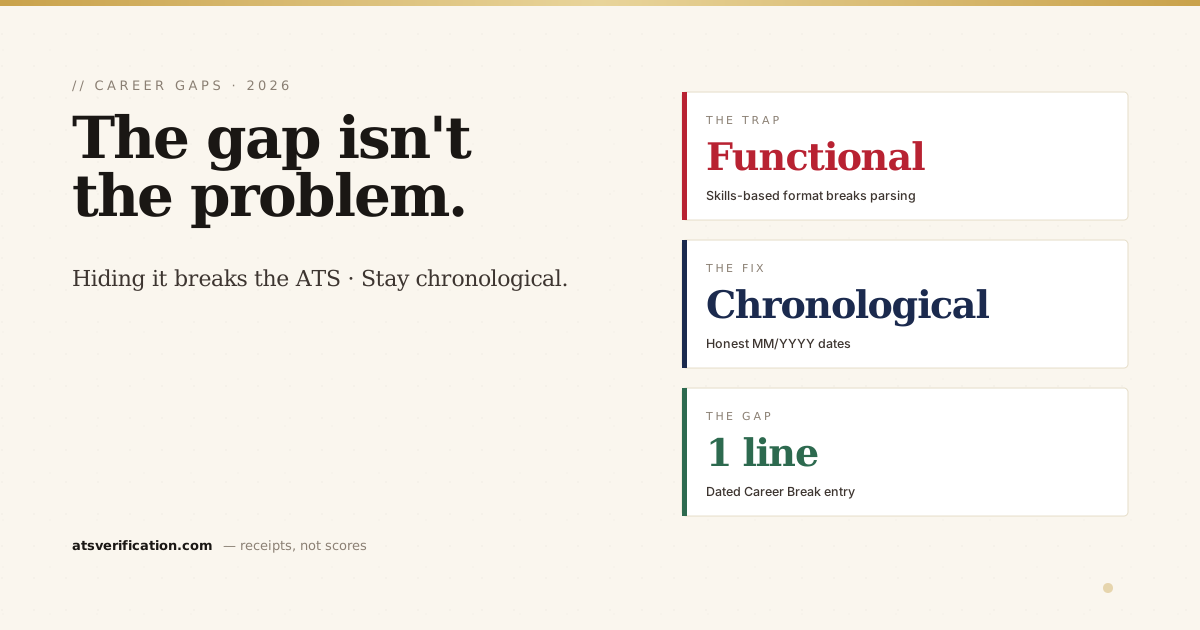
- The "functional" (skills-based) resume, the classic gap-hiding format, is an ATS parsing killer. It strips the date-anchored work history the parser needs, so your experience fields come back half-empty.
- The ATS doesn't "judge" a gap. It computes fields. It tallies your total years of experience and most-recent title from your dated history, so honest, well-structured dates help you; missing structure hurts you.
- Stay chronological and keep MM/YYYY dates. A clean reverse-chronological resume parses correctly even with a gap in it.
- Name the gap in one honest line, "Career break, caregiving, 2024–2025", rather than leaving an unexplained hole the recruiter has to imagine the worst about.
- Years-only dates ("2022–2024") hide short gaps and are perfectly standard, but never fabricate dates to erase a gap; it surfaces in background checks.
Gaps are normal now, the data and the culture both moved
Separations, layoffs, and voluntary quits are a constant, measured feature of the labor market, the U.S. Bureau of Labor Statistics JOLTS series tracks millions of them every month. The 2023–2025 tech and corporate layoff waves put gaps on a huge number of strong résumés at once, and hiring norms adjusted: LinkedIn even built an official Career Break profile feature so people can label time off without inventing a fake "consultant" role. The stigma is fading. The technical trap, however, is alive and well.
The #1 mistake: the functional resume
When people want to "hide" a gap, the internet often points them at the functional or "skills-based" resume, one that leads with grouped skill clusters ("Leadership," "Project Management") and pushes the dated employment history to the bottom, shrinks it, or drops dates entirely. (Here is the full breakdown of chronological vs functional vs combination formats, and why two pass the ATS and one does not.)
It feels clever. It is the single worst thing you can do to your parse. Here's why: an ATS is built to extract a structured work history, for each role, a {title, employer, start date, end date}. A functional layout deliberately dismantles exactly that structure. The parser can't tie your skills to any employer or timeframe, so it populates your "experience" fields with fragments or blanks. (This is one of the most common parsing failures we see, and recruiters have independently learned that functional resumes are where people hide things, so the format triggers human suspicion too.) You set out to look polished and instead arrive in the database looking like someone with no verifiable experience.
How an ATS actually "reads" a gap
It helps to know there's no module in any ATS labeled "gap detector." What actually happens (covered in depth in how ATS scoring works): the parser reads your dated roles, computes a total years of experience figure and a most-recent title, and files them as searchable fields. Recruiters then filter the database on those fields ("8+ years," "Product Manager").
The consequence is the opposite of what gap-anxiety assumes:
- A clean chronological resume with a visible gap parses perfectly, every field populates, you show up in the right searches, and a human decides what to make of the gap.
- A functional resume that hides the gap parses badly, your years-of-experience field may come back blank, so you silently fail the "X+ years" filter and never surface at all.
Read that twice: hiding the gap is what gets you filtered, not the gap.
The format that works: honest chronological
Keep the standard reverse-chronological structure that parses cleanly everywhere (the same single-column, standard-heading rules in our ATS-friendly format guide), and treat the gap as just another dated entry:
| Entry | Dates |
|---|---|
| Senior Analyst, Acme Corp | Mar 2025 – Present |
| Career Break, Full-time caregiving | Jun 2023 – Feb 2025 |
| Analyst, Globex Inc. | Jan 2020 – May 2023 |
A one-line, factual gap entry does three jobs at once: it keeps the timeline continuous (no unexplained hole), it parses as a normal dated block, and it pre-answers the recruiter's question so they don't fill the silence with a worse story than the truth.
Framing the gap by type
| Reason | How to label it |
|---|---|
| Layoff / redundancy | No special label needed, just the next role's dates. If asked, "role eliminated in a restructuring" is neutral and common. |
| Caregiving | "Career Break, Family caregiving", widely understood, no detail owed. |
| Health | "Career Break, Personal/health (now fully resolved)." Never disclose a diagnosis. |
| Study / reskilling | List it as Education or "Professional Development, [course/cert]." This is a strength; foreground it. |
| Failed business / freelancing | A real role: "Founder, [Venture]" or "Independent Consultant" with genuine, quantified outcomes. |
| Sabbatical / travel | "Career Break, Sabbatical." Add a line only if you did something relevant (language, volunteering). |
If you kept any hand in, freelance projects, volunteering, a certification, open-source work, give it a dated entry with a quantified line or two (the same outcome-focused bullet pattern applies). It both fills the timeline and proves momentum.
The honest line on dates
Two legitimate techniques shorten how a gap reads, neither is lying:
- Year-only dates ("2022–2024" instead of "Nov 2022 – Jan 2024") are a standard convention and naturally absorb gaps shorter than ~12 months. Use them consistently across all entries, not just the ones around the gap.
- A dated "Career Break" entry for anything longer, as shown above.
What is never worth it: fabricating or stretching dates to erase a gap. Employment dates are the most routinely verified item in a background check; a mismatch can cost you an offer after you've won it. The truth, well-formatted, beats a lie that parses.
Keep the three surfaces aligned
Recruiters cross-check. Your résumé dates, your LinkedIn timeline (use its Career Break entry), and anything you say in the cover letter should tell the same dated story. A gap that's open on the résumé but papered over on LinkedIn reads as evasive, consistency is what signals confidence.
Before you apply: confirm it still parses
The whole point of staying chronological is that the machine can read you. So verify it did, especially if you used a template or moved sections around. (New to how this layer works? Start with what an ATS is and how it reads your resume.) Run a free scan and check that your dates, titles, and total years of experience all extracted correctly, including the entries on either side of your gap.
→ Free ATS scan, confirm your work history parses cleanly, gap and all