A Canadian resume sits in between the American and the British conventions, close to the US format, but with its own rules that trip up newcomers and US applicants alike. And like everywhere else, the big Canadian employers run your resume through an ATS before a human reads it. Here's what actually matters for Canada in 2026, whether you're a new grad, an experienced professional, or arriving from abroad.
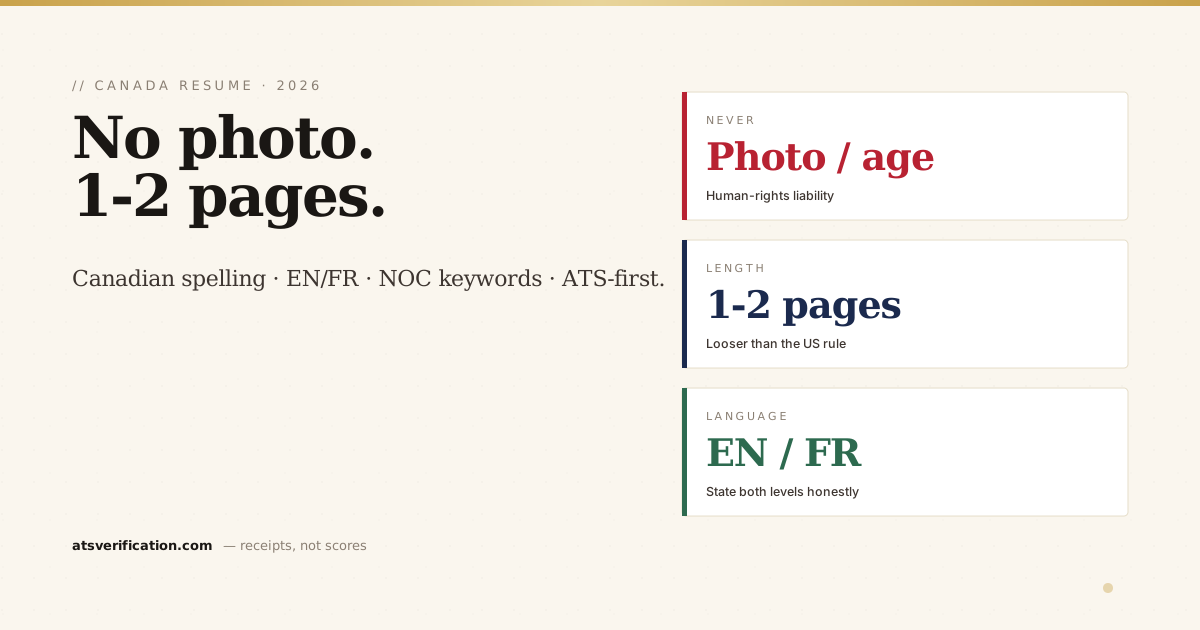
- No photo, no age, no marital status, no SIN. Canadian human rights law makes these radioactive, recruiters discard resumes that include them.
- 1-2 pages is the norm, Canada is more relaxed than the US 1-page rule; 2 pages is fine for experienced candidates.
- Canadian spelling. "Favour," "colour," "organize/organization", keyword matchers are literal, so match the Canadian English the posting uses.
- Bilingual matters for some roles. Federal government and Quebec roles often need French; state your language levels honestly.
- Big employers run an ATS (Workday, Taleo, SuccessFactors). A two-column "designer" resume scrambles in the parser, clean structure first, content second.
What makes a Canadian resume different
If you're coming from the US, most of your instincts carry over, but a few things change. If you're coming from the UK, India, or elsewhere, the shift is bigger. (For the full country-by-country comparison, see CV vs resume rules by country.)
| Element | Canadian expectation | Why |
|---|---|---|
| Photo | Never | Human-rights / discrimination risk, recruiters often discard resumes with photos |
| Age / date of birth | Never | Protected ground under human rights codes |
| SIN, marital status, nationality | Never | Protected/sensitive; never belongs on a resume |
| Length | 1-2 pages | 2 pages widely accepted, unlike the strict US 1-page bias |
| Spelling | Canadian English | "Favour," "centre," "organization", match the posting's vocabulary |
| Language | State EN/FR levels | Bilingualism is an asset and sometimes required |
| References | Omit ("available on request" too) | Assumed; wastes space |
The anti-discrimination point is law, not etiquette: the Canadian Human Rights Commission lists age, marital status, and national origin among protected grounds, which is exactly why Canadian recruiters treat a photo or birthdate as a liability rather than a courtesy.
The standard Canadian resume structure (ATS-safe order)
- Header: Name, city + province, phone, email, LinkedIn, in the document body, never the Word header/footer (which parsers skip).
- Professional Summary: 2-3 lines, title-matched to the role, with your strongest quantified claim.
- Experience: Reverse-chronological. Company, title, location, dates (MM/YYYY), 3-6 accomplishment bullets per recent role.
- Education: Degree, institution, year. Note Canadian-equivalency if your credential is foreign.
- Skills: A clearly-labeled flat list, what recruiter searches hit.
- Optional: Certifications, languages (EN/FR), volunteer work (valued in Canada).
Single column. No tables, text boxes, or two-column sidebars, the classic parsing killers (here are the 10 most common ATS parsing failures).
Accomplishments, quantified
Like American employers, Canadian recruiters read for outcomes, not duties. "Responsible for reporting" reads as filler; "Cut monthly close from 9 days to 5 by automating reconciliations" reads as evidence. Numbers, percentages, dollar figures, our 40+ before/after quantification examples show the pattern for every role family.
Keywords: use the NOC and the posting
Canada's National Occupational Classification (NOC) is the official taxonomy of Canadian jobs and their standard skill vocabulary, a useful source for the exact terms employers and HR systems expect for your occupation. Combine it with the specific posting's language, mirrored into your title line, summary, and skills section. The federal Job Bank is also a solid place to study real Canadian postings (and our profession keyword databases help on the term side).
For newcomers to Canada
- Don't volunteer immigration status on the resume. Whether you're a PR, citizen, or on a work permit is handled in application questions, though noting "eligible to work in Canada" can pre-empt a filter.
- Translate your credentials. State Canadian equivalency where helpful ("Bachelor of Commerce, assessed as equivalent to a Canadian bachelor's degree, WES").
- Add Canadian context fast, local volunteer work, Canadian certifications, or a local course signals you're established and reduces the "no Canadian experience" objection.
The ATS layer in Canada
Canada's large employers, the banks (RBC, TD, Scotiabank), Shopify, the telecoms, the federal government, the consultancies and retailers, run Applicant Tracking Systems (Workday, Oracle Taleo, SAP SuccessFactors). Your resume is parsed and keyword-scored before a human opens it (the mechanics are in how ATS scoring works). Keep the layout single-column and standard per the ATS-friendly format guide. (Applying across the border too? The US resume format guide covers the differences, and for the UK, where it's a 2-page "CV" with a personal statement, see the UK CV format guide, and the Australian resume guide for that market.)
Check the layer you can't see
A resume can follow every Canadian convention above and still parse wrong because of one table or a header-embedded contact line. Run a free scan to see exactly what Canadian employers' software extracts from your resume, name, titles, dates, skills, field by field, before you apply.
Choosing a tool to build it in
American resume builders get three Canadian things wrong by default: the photo slot, the language setting, and the assumption that a resume is what gets screened. Federal hiring through GC Jobs assesses written answers rather than an attached resume. There is an honest comparison, including the free settlement-agency route, in the Canadian resume builder guide.
→ Free ATS scan, see your resume the way Canadian employers' software sees it