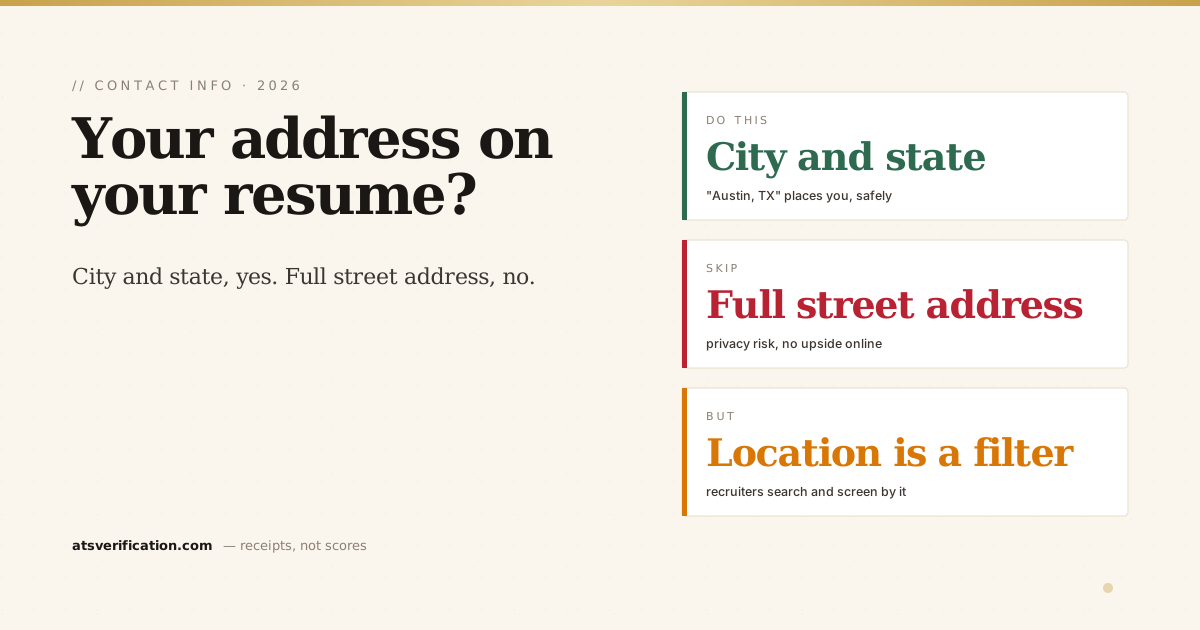
Should you put your address on your resume? In 2026, the answer for most US applicants is: your city and state, yes, your full street address, no. The full-address habit is a leftover from when resumes were mailed, and today it costs you privacy and gains you nothing. But there's a catch worth understanding, because location is something the applicant tracking system and recruiters filter on. Here's how to get it right.
- Use city and state, not a full street address. "Austin, TX" is the modern standard; your street and house number are unnecessary.
- Privacy is the reason. A full address on a document you send to strangers and upload to job sites exposes you to identity theft and bias.
- But location still matters to the ATS. Recruiters filter and search by location, so leaving location off entirely can hurt you on local roles.
- Match the role: remote roles care less; local, government, or healthcare roles may expect to see you're in the area.
- Keep it in the body, not the header, contact details in a page header can be skipped by the parser.
The short answer: city and state
List your city and state (for example, "Denver, CO") in your contact line. That's enough for a recruiter to know your general location and for the system to place you geographically. Your full street address, house number, street, ZIP, adds nothing useful and creates risk. According to the Indeed Career Guide, most recruiters no longer expect a full address on resumes submitted online.
Why full addresses hurt you
- Privacy and identity theft. Your resume gets emailed, forwarded, and uploaded to job boards you don't control. A full home address in that document is exposure you don't need (the FTC lists personal details like this among what identity thieves collect). This is the same privacy-first logic behind never handing your data to tools that don't need it, see is it safe to upload your resume to an ATS checker.
- Hiring bias. A specific neighborhood or ZIP can trigger assumptions about you before your skills are read.
- Commute filtering. Some recruiters screen out applicants who look "too far" from the office based on a full address, even when you'd happily relocate or commute.
The catch: location is an ATS filter
Here's what the "just remove your address" advice misses. Location is one of the things recruiters actively search and filter on, and on some applications it's a screening question that can auto-reject you (the same mechanic behind instant rejections). So leaving location off entirely can backfire, for a local role, a recruiter filtering by city won't find you. That's why city and state is the sweet spot: enough to place you, not enough to expose you. On roles that ask "are you located in / willing to relocate to X?", answer honestly and precisely.
When you might still include more
- Local-residency roles, some government, municipal, and healthcare positions require you to live in a specific area, and may expect a fuller address.
- Very traditional employers or older hiring managers who still expect it.
- Relocation cases, if you're moving, list your target city with a note like "Relocating to Seattle, WA (Sept 2026)" so a local search finds you.
- Remote roles, location matters least here; city and state (or even just your country and time zone) is plenty. See the remote job resume guide.
Where to put it (so the ATS reads it)
Put your city and state in the body of page one, alongside your name, email, and phone, not tucked into a page header or footer, which some parsers skip entirely (the same reason the ATS sometimes can't read your name). Keep it plain text, one line, no icons.
Once you've set your contact line, confirm the whole thing parses. Run the free copy-paste test or a free ATS scan that shows the exact text extracted from your file, no invented score, no signup. For the complete setup, see the US resume format guide and how to pass the ATS.