In the UK it's a CV, not a résumé, and the British CV has its own conventions that differ from the American one in ways that matter. It runs to two pages, opens with a personal statement, and (post-Brexit) often needs a line about your right to work. And like everywhere else, the large British employers run your CV through an ATS before a human reads it. Here's the UK format that works in 2026.
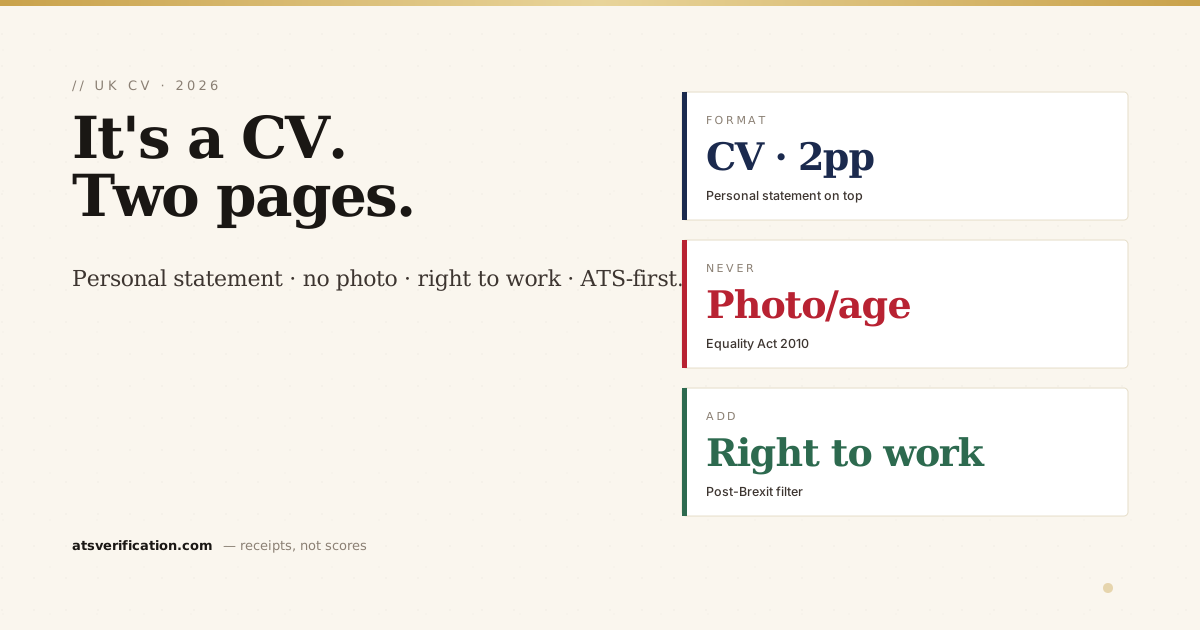
- It's a "CV," and two pages is standard. Unlike the strict US 1-page rule, UK employers expect two pages for most professionals.
- Open with a personal statement, a 3-4 line profile at the top is a UK convention, not optional padding.
- No photo, no age, no marital status. The Equality Act 2010 makes these discrimination risks, British recruiters expect them left off.
- Add a right-to-work line. Post-Brexit, employers must verify it, "UK citizen" or "Skilled Worker visa" near the top saves you a filter.
- British spelling, and an ATS underneath. "Organise," "centre," "CV", and big employers run Workday/Taleo, so keep the layout single-column and parseable.
What makes a UK CV different
If you're applying from the US, several things change; if you're arriving from elsewhere, the shift is bigger. (For the full country comparison, see CV vs resume rules by country; the US, Canadian and Australian guides cover those markets.)
| Element | UK expectation | Why |
|---|---|---|
| What it's called | CV (curriculum vitae) | "Résumé" reads as American; UK uses "CV" for the standard 2-page job document |
| Length | 2 pages | Standard for most roles; 1 page only for early-career, 3+ for senior/academic |
| Personal statement | Yes, at the top | A 3-4 line profile is a UK convention recruiters look for |
| Photo / age / marital status | Never | Equality Act 2010, discrimination risk; recruiters expect them omitted |
| Right to work | State it | Post-Brexit, employers must check, pre-empts a filter |
| Spelling | British English | "Organise," "colour," "centre", keyword matchers are literal |
| References | "Available on request" or omit | Don't list full referee details upfront; assumed |
The anti-discrimination point is law: the Equality Act 2010 makes age, marital status, and similar characteristics protected, which is why British recruiters treat a photo or date of birth as a liability. The National Careers Service (the official UK careers guidance body) reflects these conventions in its CV advice.
The standard UK CV structure (ATS-safe order)
- Header: Name, town/city, phone, email, LinkedIn, in the document body, never the Word header/footer (which parsers skip).
- Personal statement: 3-4 lines. Who you are, your specialism, and your strongest quantified achievement, tuned to the role.
- Work experience: Reverse-chronological. Employer, job title, location, dates (MM/YYYY), 3-6 accomplishment bullets per recent role.
- Education: Degree, institution, year (and grade/classification where relevant, e.g. "2:1").
- Skills: A clearly-labelled flat list, what recruiter searches hit.
- Optional: Certifications, languages, and a short interests line (more accepted in the UK than the US, keep it brief and relevant).
Single column. No tables, text boxes, or two-column sidebars, the classic parsing killers (see the 10 most common ATS parsing failures).
The personal statement (the UK-specific bit)
This is the piece US applicants most often miss. A UK CV opens with a 3-4 line statement, not an "Objective," but a tight profile: "Qualified management accountant (ACCA) with 8 years in FMCG, specialising in FP&A and cost control. Cut monthly close from 9 days to 5 across a £40M division. Seeking a senior finance role in a growth business." It does double duty: it gives the recruiter an instant read, and it loads the highest-weighted spot on the CV with your role keywords.
Right to work, state it plainly
Since Brexit, UK employers are required to verify a candidate's right to work, and many filter on it early. If you have it, say so near your contact line: "UK citizen," "ILR / settled status," or "Skilled Worker visa." It removes an objection before it forms. The official rules are on GOV.UK. (If you need sponsorship, handle the detail in the application questions, not as a CV headline.)
Accomplishments, quantified
British recruiters read for outcomes as much as American ones. "Responsible for reporting" is filler; "Reduced monthly close from 9 days to 5 by automating reconciliations" is evidence. Numbers, percentages, £ figures, our 40+ before/after quantification examples show the pattern, and length-wise the 2-page norm gives you room the US 1-pager doesn't.
Keywords and the ATS layer
Mirror the job advert's exact vocabulary in your personal statement, job titles, and skills list, and use British spelling consistently, since matching is literal. Underneath it all, large UK employers, the banks, the Big Four, retailers, much of the public sector, run Applicant Tracking Systems (Workday, Oracle Taleo, SAP SuccessFactors). Your CV is parsed and keyword-scored before a human opens it (the mechanics are in how ATS scoring works), so keep the layout single-column and standard per the ATS-friendly format guide.
Check the layer you can't see
A CV can follow every British convention above and still parse wrong because of one table or a header-embedded contact line. Run a free scan to see exactly what UK employers' software extracts from your CV, name, titles, dates, skills, field by field, before you apply.
Choosing a tool to build it in
Most "best CV builder" lists aimed at British readers are rewritten American articles, and the American defaults inside those tools work against a UK CV: a one-page cap, US spelling that breaks literal keyword matching, and month-day dates. There is an honest comparison, including the free option and the reason the NHS makes the whole question moot, in the UK CV builder guide.
→ Free ATS scan, see your CV the way British employers' software sees it