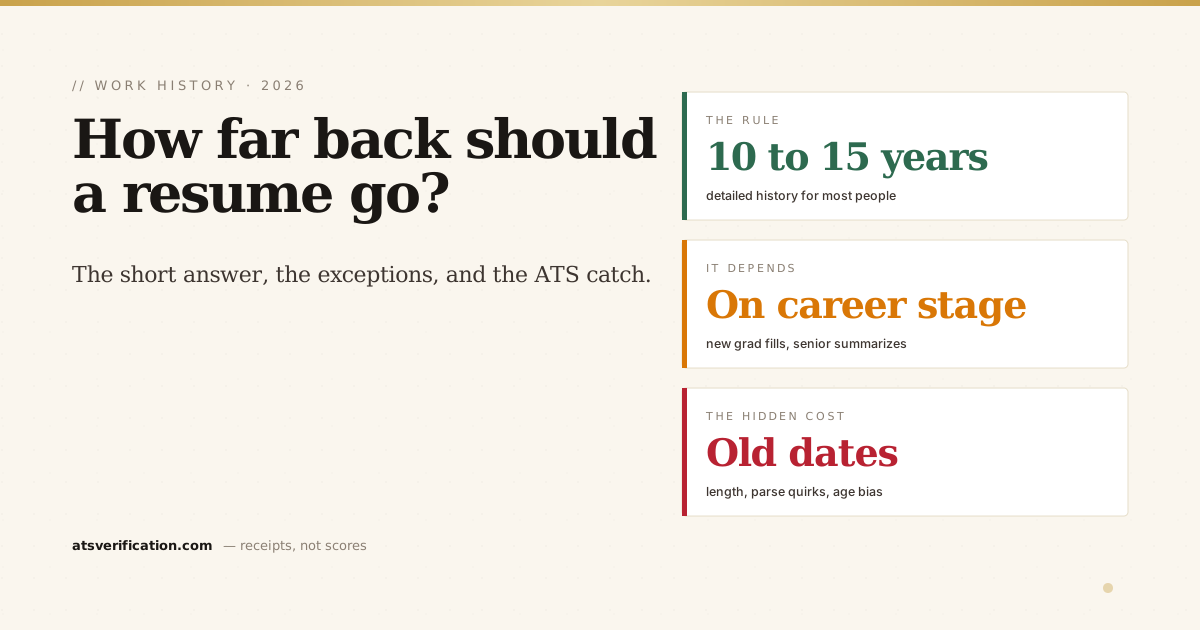
"How far back should a resume go?" is one of the most-asked resume questions in the US, and the short answer is simple: 10 to 15 years for most people. But the real answer depends on your career stage and, in a detail almost nobody mentions, on how those older roles and their dates affect the software that reads your resume first. Here's the rule, the exceptions, and the ATS angle.
- The default is 10-15 years. Include the work history most relevant to the role you want, and let older roles drop off or shrink.
- Career stage shifts it: early-career resumes cover everything; senior and executive resumes focus on the last 10-15 years and summarize the rest.
- Relevance beats recency. A directly relevant older role can stay; an irrelevant recent one can go.
- Older dates carry an ATS and bias cost. Long-gone roles add length, can trigger date-parsing quirks, and can invite age bias, trim or summarize them.
- Whatever you keep, make sure it parses. Consistent date formatting matters more than most people think.
The rule: 10 to 15 years
For most professionals, your resume should cover the last 10 to 15 years of work history in detail. That window captures the experience recruiters actually weigh, keeps your resume to a sensible length (see 1 page vs 2 pages), and keeps the focus on who you are now, not who you were in 2008. Roles older than that either drop off entirely or get condensed into a short "Earlier Experience" line. As the Monster career guide and the Indeed Career Guide both note, 10-15 years is the widely accepted standard.
It changes by career stage
- Entry-level / new grad: include everything relevant, internships, part-time work, projects. You're not trimming; you're filling. (See the US resume format guide.)
- Mid-career (5-15 years): cover your full professional history, but weight detail toward the most recent and relevant roles.
- Senior / executive (15+ years): detail the last 10-15 years, then summarize earlier roles in one or two lines. Nobody needs bullet points from three jobs ago.
- Career changer: lead with relevance, not chronology, a relevant older role may deserve more space than a recent unrelated one (see resume formats compared).
When to go further back, or shorter
Go back further than 15 years only when an older role is genuinely relevant to the target job, or when it helps explain an employment gap. Go shorter than 10 years when your recent experience fully covers the role and older work would just add clutter. The test is always the same: does this role help you get this job? If not, it's taking up space a recruiter's eyes could spend on what matters.
The part nobody tells you: the ATS and age cost
How far back you go isn't only about relevance, it interacts with the software that reads your resume before a human does:
- Date consistency matters. Every role you keep needs clean, consistent dates. Mixed formats (2019, Mar 2020, 03/2021) can confuse parsers and scramble your timeline. Use one format throughout (see how to format dates).
- Length affects the parse and the read. Padding your resume with 20-year-old roles pushes it long, and a longer, denser file is easier to misparse and harder for a recruiter to skim.
- Age signals invite bias. A graduation year from 1994 or roles from the 1990s can trigger age bias before your skills are even read. Dropping older dates (including graduation year) is a common, legitimate move (more in resumes for experienced workers).
How to trim older experience cleanly
- Keep the last 10-15 years in full with dates, titles, and quantified bullets.
- Summarize older roles in a brief "Earlier Experience" section, title, employer, and optionally no dates.
- Cut anything irrelevant regardless of age.
- Standardize every date that remains.
- Confirm it still parses, trimming changes your layout, so verify the result.
You can't tell whether your trimmed resume parses cleanly by looking at it. Run the free copy-paste test or a free ATS scan that shows the exact text extracted from your file, no invented score, no signup. And for the fuller picture, see the resume mistakes that cause auto-rejection and how to pass the ATS.